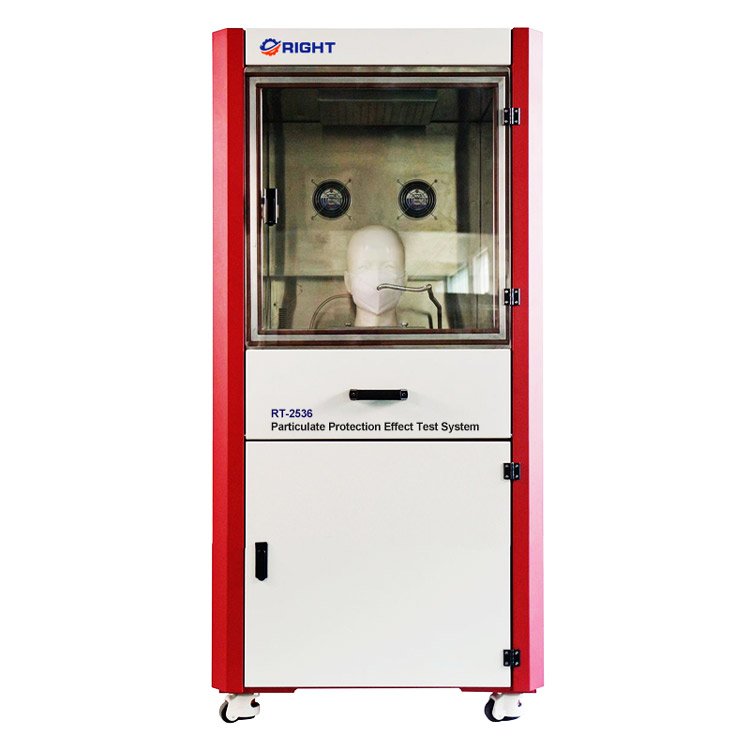
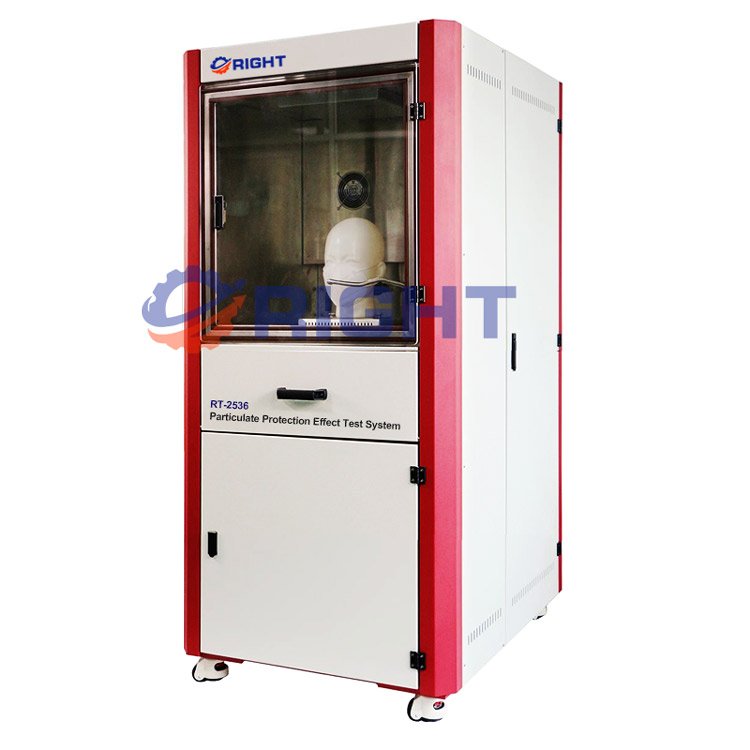
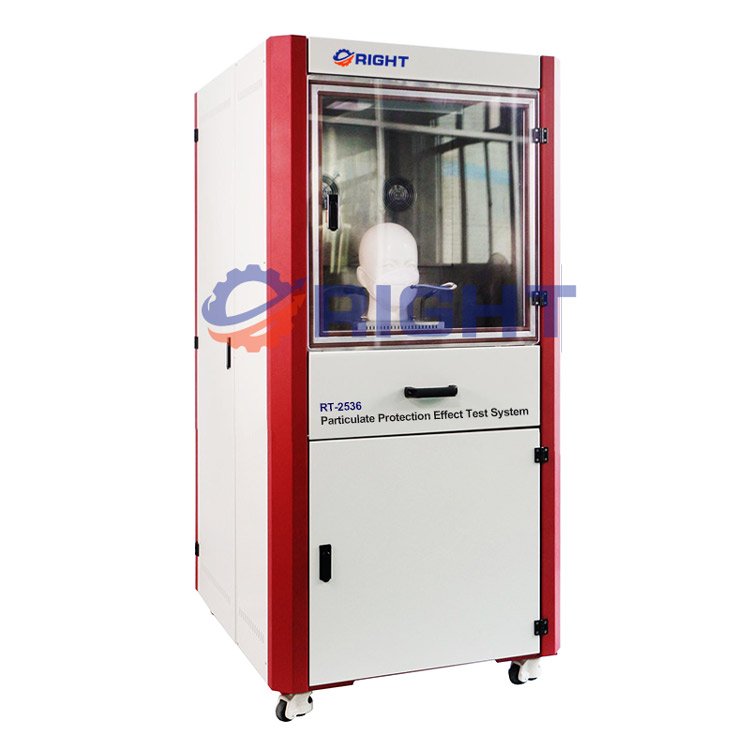

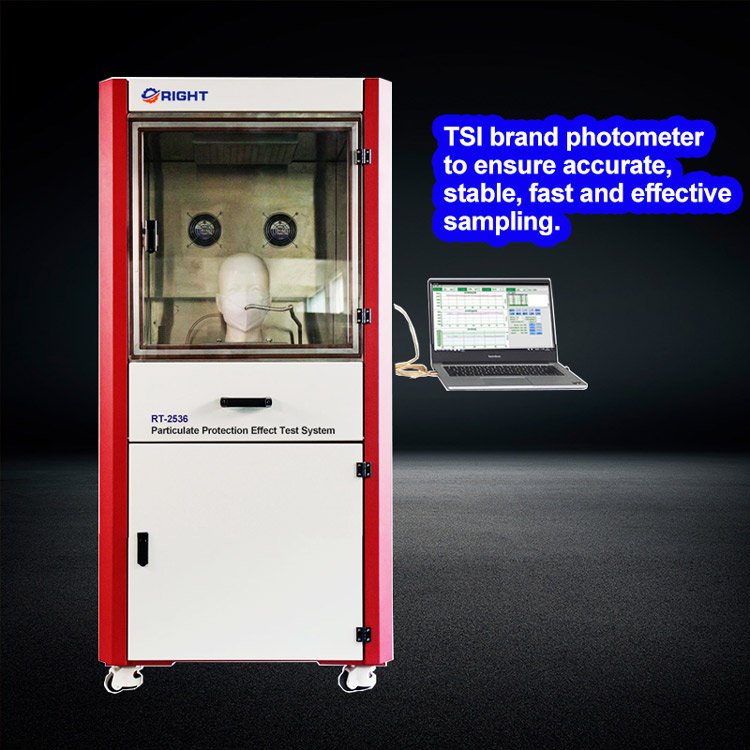
Product Overview
Core Product Competitive Advantages
-
Imported High‑Precision Photometric Detection Unit
Adopts well‑known TSI‑brand photometer for particle‑concentration acquisition. It simultaneously monitors aerosol concentration inside test chamber and inhalation‑side concentration of the head‑form breathing duct. Features fast response speed, stable signal output and high measuring accuracy for reliable filtration‑effect data output.
-
Servo‑Driven Artificial Lung for Simulated Human‑Breathing Motion
Servo‑motor‑controlled breathing simulator generates sinusoidal respiratory airflow. Both breathing frequency and tidal‑ventilation volume can be digitally configured. It faithfully reproduces human‑inhalation‑exhalation rhythm to realise dynamic real‑condition mask‑performance evaluation instead of static flat‑sample‑only testing.
-
Integrated Salt‑&‑Oil Dual‑Aerosol Generation, Automatic‑Mode‑Switching
One‑unit supports two aerosol‑challenge media without hardware‑replacement. Oily aerosol uses DEHS / corn‑oil / paraffin‑oil; salt aerosol adopts NaCl solution. System realises automated mode‑switching. Aerosol density can be quickly stabilised and adjusted to satisfy different particulate‑challenge test‑requirements.
-
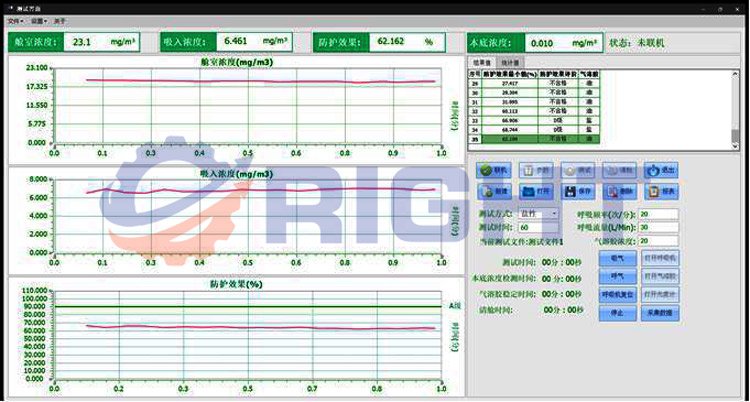
Dedicated Test‑Software Suite for Complete‑Data‑Management
Matching professional PC‑software visualises real‑time test‑curves of chamber‑concentration, inhaled‑concentration and protective‑efficiency metrics. Test‑records can be stored locally, reviewed, exported or printed out directly for laboratory‑report compilation.
-
Integrated Enclosed Cabinet‑Style Mechanical Layout
Full‑enclosed test‑chamber structure reduces external‑ambient interference on internal aerosol environment. Mobile caster base supports convenient lab‑relocation. Cabinet‑viewing‑window permits visual observation of mask‑mounted head‑form during complete test‑sequence.
Complete Technical Parameter Table
| Parameter Item | KR‑2536 Standard Specification |
|---|---|
| Breathing‑Simulation Frequency | 10‑30 cycles/min, freely programmable |
| Sinusoidal Breathing Air‑Volume | 20‑40 L/min, adjustable |
| Oily Aerosol Medium | DEHS / Corn oil / Paraffin oil |
| Oily‑Aerosol Particle‑Size | 0.02‑2 μm, median particle‑size 0.3 μm |
| Salt‑Aerosol Medium | Sodium Chloride (NaCl) |
| Salt‑Aerosol Particle‑Size | 0.02‑2 μm, median particle‑size 0.6 μm |
| Aerosol Concentration Range | 10‑40 mg/m³, adjustable |
| Photometer Measuring‑Range | 0‑400 mg/m³ |
| Standard Test‑Ambient‑Condition | Temperature:25±5 ℃; Relative‑Humidity:30±10 %RH |
| Compressed‑Air‑Source Requirement | 0.5 MPa |
| Overall Outer Dimension(L×W×H) | 800 × 1000 × 1700 mm |
| Complete‑Machine Net‑Weight | 100 KG |
| Power‑Supply | AC 220V 50 Hz, rated power 300 W |
Compliance Standards: GB/T 32610 Appendix‑B Technical specification for daily protective masks
Standard Complete Test Operating Workflow
-
Pre‑Test Preparation
Place main‑unit on level lab‑floor, lock mobile casters. Connect compressed‑air source at 0.5 MPa and mains‑power‑supply. Start supporting PC‑test‑software. Fill respective salt‑solution or oily‑liquid consumables into aerosol‑generator according to planned test‑type. Allow instrument to warm‑up and complete self‑diagnosis. Configure breathing‑frequency, breathing‑volume and target aerosol‑concentration parameters on software interface.
-
Specimen Installation
Open test‑chamber door. Fit test‑mask securely onto standard anthropomorphic head‑form; double‑check mask‑face‑sealing condition to avoid air‑leakage gaps. Close and latch test‑chamber door tightly.
-
Aerosol‑Stabilisation & Formal‑Test‑Run
Trigger aerosol‑generation function. Wait until chamber‑particle‑concentration stabilises at target‑value. Activate artificial‑lung simulator to initiate sinusoidal breathing‑motion. System collects upstream‑downstream particle‑concentration data continuously and computes real‑time particulate‑protective‑efficiency values.
-
Test‑Completion & Data‑Processing
Once pre‑set test‑duration finishes, system automatically terminates aerosol‑supply and breathing‑simulation. Review test‑curves and final‑calculated protective‑efficiency figures within software. Save dataset or output printed test‑report as documentation requirement.
-
Post‑Test Tidying
Open cabinet‑door, remove tested mask‑specimen. Clean inner‑chamber and head‑form surface of residual aerosol‑deposits. Drain leftover salt‑/oil consumables from aerosol‑generator. Shut‑down software, instrument main‑unit and compressed‑air‑supply. Conduct regular maintenance for photometer and aerosol‑nozzle assembly.
Wide Industrial Application Scenarios
Mask & Respiratory‑Protection‑Product Manufacturing Enterprises
Filter‑Material & Melt‑Blown‑Fabric R‑D Departments
Medical‑Device & Disease‑Control‑Related‑Institutes
University Safety‑Protection‑Material‑Research‑Laboratories
Third‑Party Accredited‑PPE‑Testing‑Organizations
Standard Factory‑Full‑Delivery Kit
- KR‑2536 mask particulate‑protection‑performance‑test‑system main‑cabinet unit
- Standard anthropomorphic test‑head‑form assembly
- Servo‑driven artificial‑lung breathing‑simulator
- Salt‑&‑oil dual‑mode aerosol‑generation‑module
- Imported TSI high‑precision photometer detection‑assembly
- Dedicated test‑processing PC‑software and data‑transmission‑cable
- Power‑supply connecting‑cable
- Multilingual printed‑operation‑manual complying with GB/T 32610‑related‑test‑requirements
- Factory‑issued performance‑inspection‑certificate
Optional spare‑parts & custom‑options: replacement aerosol‑nozzle components, additional head‑form variants, custom‑voltage power‑supply‑adaptation.
Global Distributor & After‑Sales‑Support
Product‑Banner‑Marketing‑Slogan
Core‑Feature‑Labels‑For‑Product‑Images
Safety‑Operation‑Reminder

DGKAREY – Your Reliable Partner in Global Supply
We go beyond supplying testing equipment. Our team manages the full journey — from export procedures to delivery at your door — ensuring efficiency, transparency, and peace of mind.
Related products
-

KR‑2538 Respirator Filter Element Oscillation Pretreatment Tester
-

KR‑2533 Respirator Mask Dead‑Space (CO₂ Inhalation Gas Content) Tester
-

KR‑2522 Medical & Protective Mask Flammability Tester
-

KR‑2508 Synthetic‑Blood Penetration Resistance Tester for Protective Apparel
-

KR‑2504 Continuous‑Flow Tunnel‑Type UVC Ultraviolet Sterilisation System
-

KR‑2528 Mask Visual‑Field Tester
-

KR‑2532 Full‑Face Respirator Airtightness Tester
-

KR‑2518 Non‑Woven Electrostatic Decay Tester