Product Overview
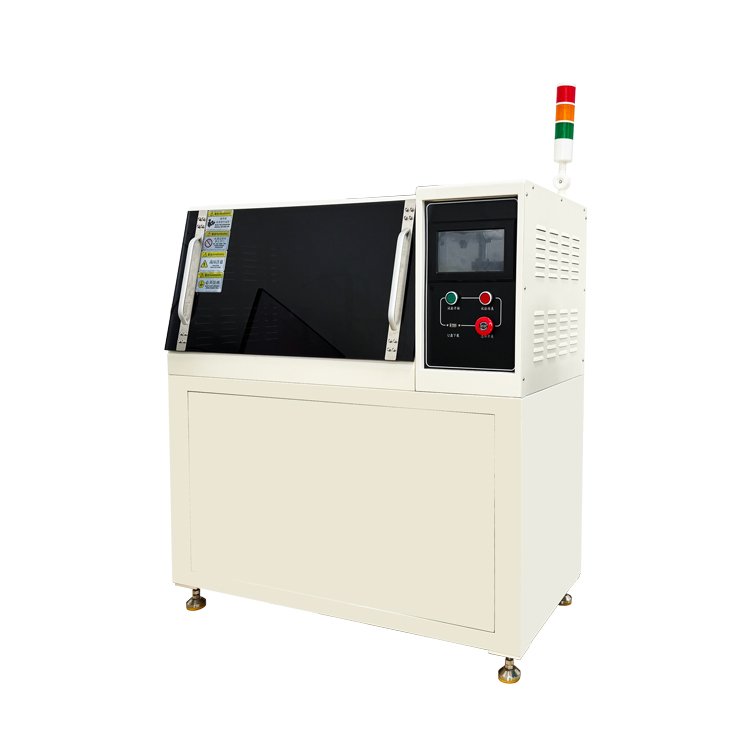
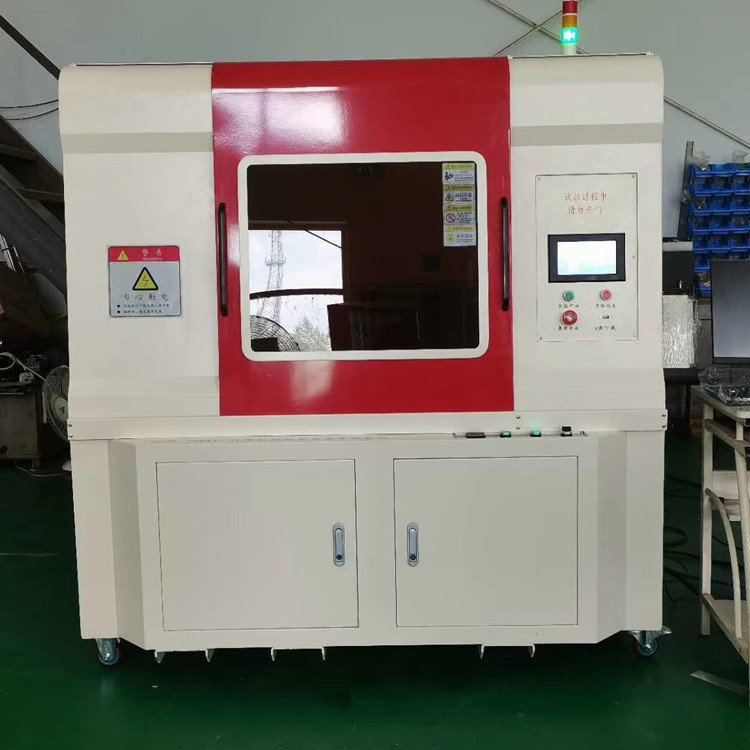
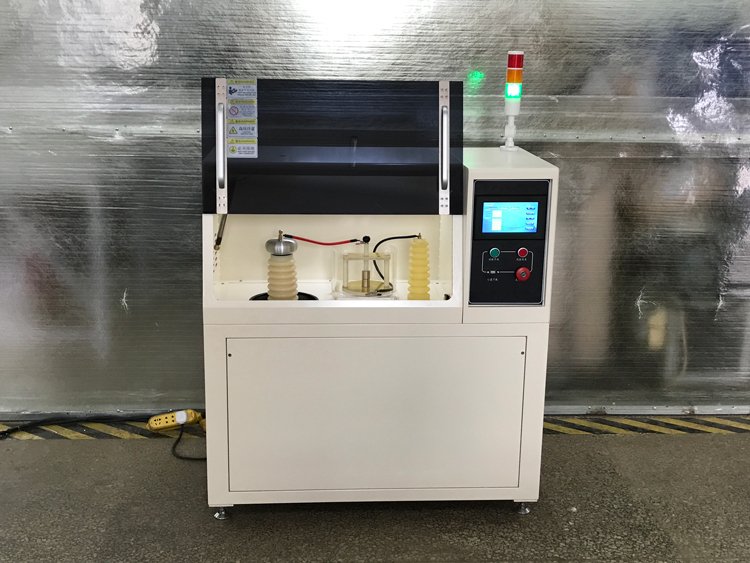
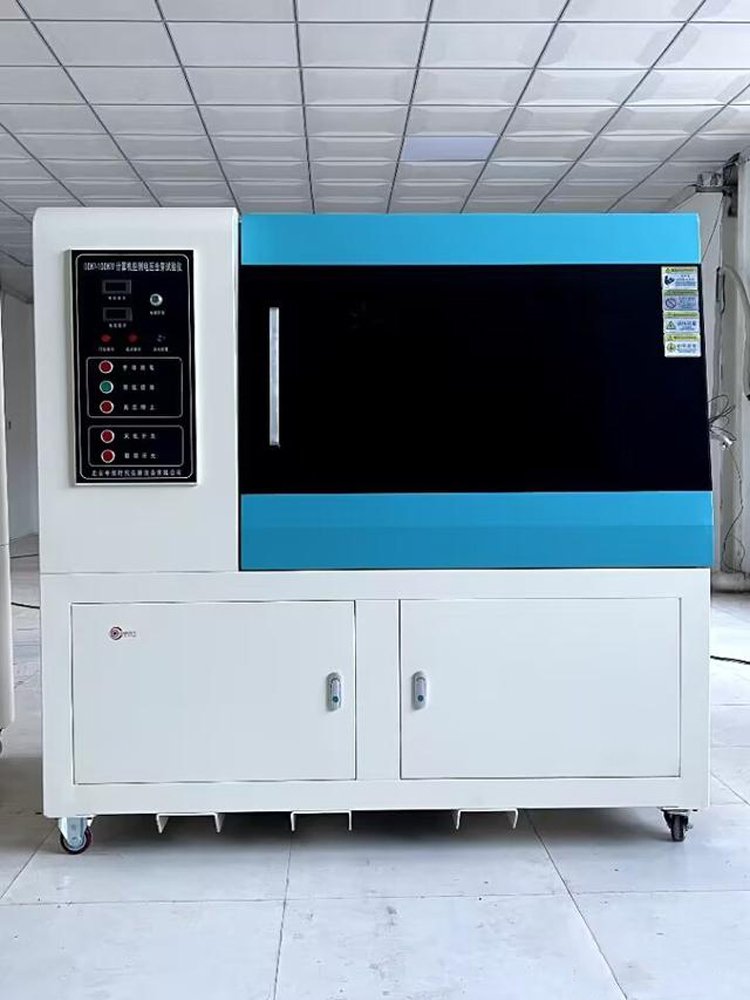
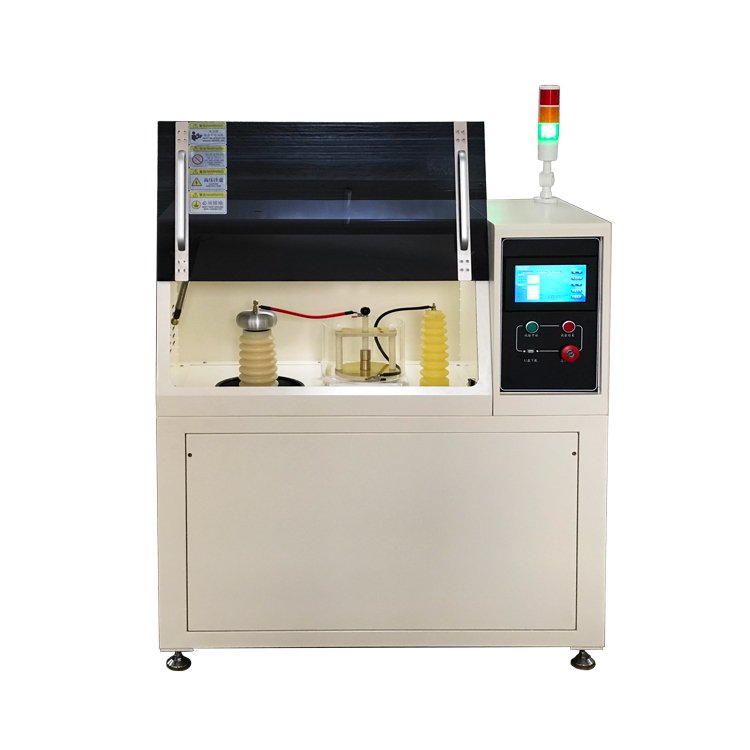
The KR‑1320 high‑voltage dielectric breakdown tester is dedicated lab‑grade equipment for characterising dielectric‑breakdown performance of solid insulating substrates and insulating‑oil media. Following ASTM D149, IEC and corresponding Chinese domestic test specifications, this unit evaluates breakdown‑voltage, dielectric‑strength and time‑to‑withstand‑voltage for films, sheets, mica products, ceramics, composite laminates and liquid dielectrics.
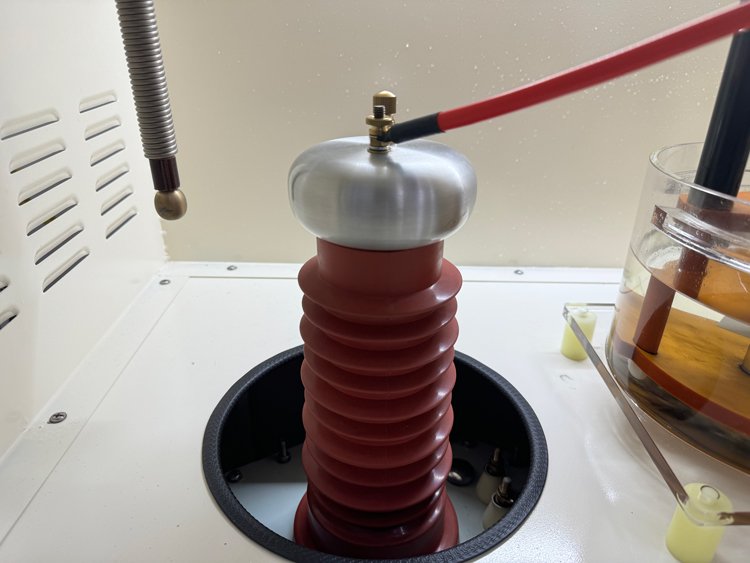
High‑voltage transformer generates adjustable AC / DC output; opto‑isolated signal‑acquisition suppresses electromagnetic interference during test cycles. Operators can run three mainstream test modes: continuous voltage ramp‑up, stepped‑voltage increase and rapid‑rise voltage test. The system captures real‑time leakage‑current and voltage‑variation curves, automatically identifies specimen breakdown events, locks peak‑breakdown values, quickly cuts off high‑voltage output and resets voltage. It supports touch‑screen standalone operation or remote PC‑software control, with built‑in functions for data storage, curve rendering, report generation and print‑output. Optional high‑temperature oil‑bath module enables thermal‑conditioned dielectric‑strength assessment under elevated‑temperature working conditions. This multi‑purpose high‑voltage test rig is widely deployed across cable‑and‑wire factories, new‑material R‑D labs, electrical‑component manufacturers and accredited third‑party safety‑testing institutes.
Core Product Competitive Advantages
- Dual AC‑DC Test Modes plus Multiple Standard‑Compliant Test Procedures
Supports both alternating‑current and direct‑current high‑voltage output. Three configurable test methodologies: continuous ramp‑up, step‑wise voltage elevation and fast‑voltage‑rise test, fully matching ASTM D149 and IEC‑defined procedural requirements for dielectric‑strength evaluation of solid and liquid insulating samples.
- Modularised Hardware Architecture & Versatile Optional Configurations
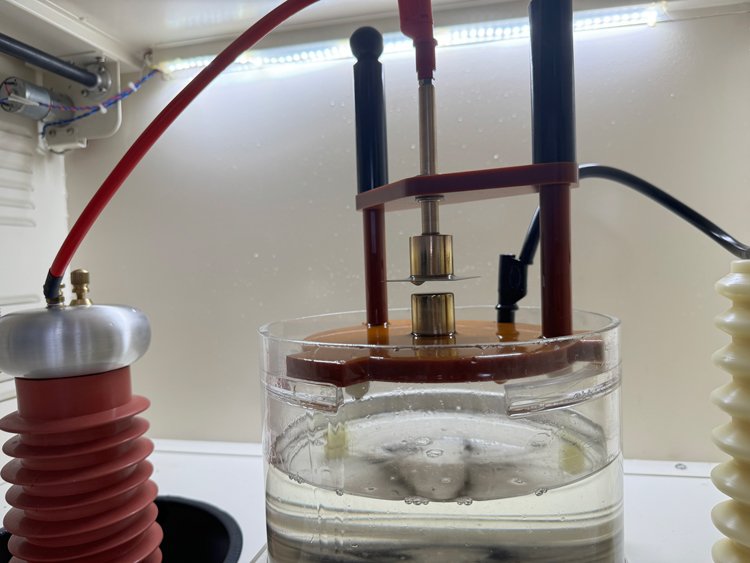
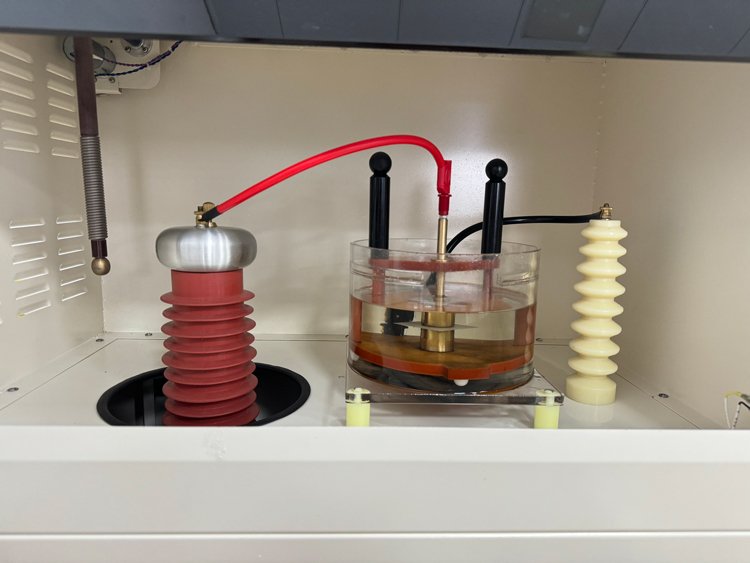
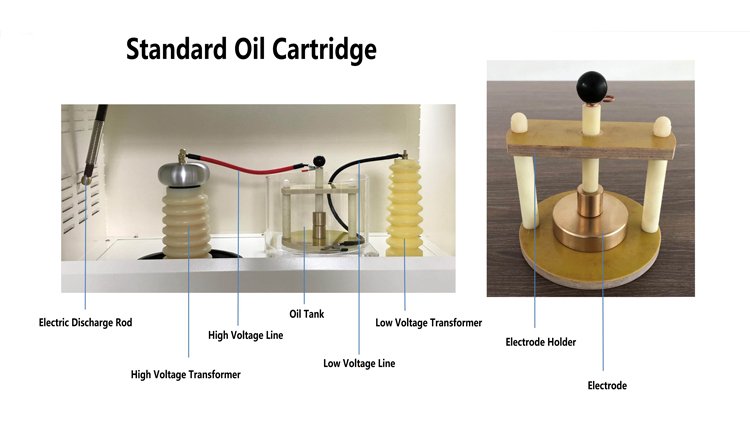
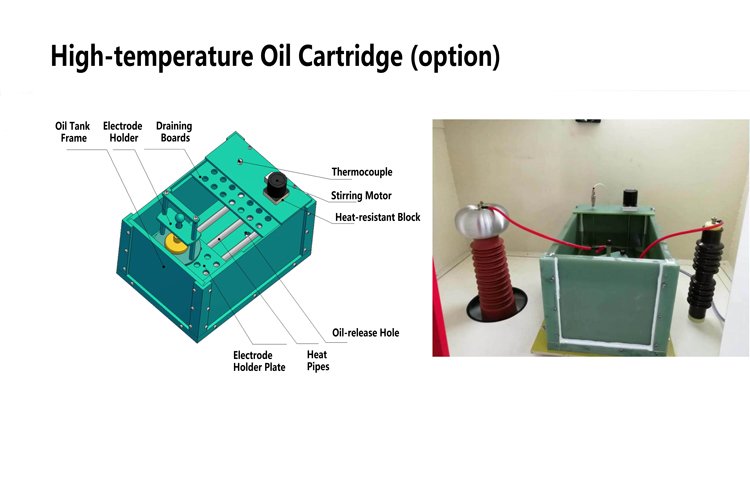
Adopts independent modular control‑unit layout, simplifying on‑site troubleshooting and component‑replacement for after‑sales maintenance. Customers may select standard‑temperature oil‑tank assembly or upgrade to high‑temperature heated‑oil‑bath assembly with stirring‑motor and thermocouple sensing for high‑temperature dielectric‑property research. Multiple interchangeable electrode kits are provided to accommodate diverse specimen geometries.
- Precision Electrode Positioning & Dual‑Mode Human‑Machine Interaction
Auto‑centering electrode mechanism guarantees accurate specimen‑electrode alignment, lowering manual‑setup error. The equipment can be operated either locally via on‑board colour touch‑screen panel or remotely through connected computer software. USB communication channel enables seamless data export to external terminals.
- Optical‑Isolation Data‑Acquisition & Comprehensive Automated Functions
Photoelectric‑isolation signal‑collection effectively filters high‑voltage‑field noise. Upon DC‑test completion, the unit triggers automatic residual‑charge discharge to safeguard operators. It automatically detects sample breakdown, records breakdown‑voltage and leakage‑current data, executes fast voltage‑cut‑off and zero‑return. Real‑time plotting of voltage‑current curves is available for traceable lab documentation.
- Multi‑Layer Safety‑Oriented Design with Audio‑Visual Warning System
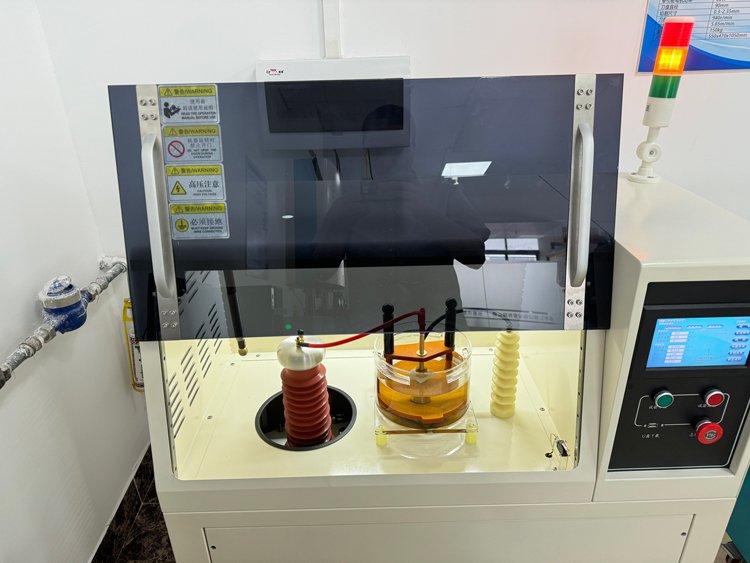
Integrated status‑indicating tower‑light delivers visual‑audible alarm notifications for distinct working‑states. Closed protective test‑cavity prevents accidental human‑contact with live high‑voltage components. Over‑current, over‑voltage and breakdown‑triggered interlock‑cut‑off mechanisms further improve lab operational safety.
Complete Technical Parameter Table
| Parameter Item | KR‑1320‑5E | KR‑1320‑10E | KR‑1320‑20E | KR‑1320‑50E | KR‑1320‑100E | KR‑1320‑150E |
|---|---|---|---|---|---|---|
| Input Power Supply | AC 220V, 50 Hz | AC 220V, 50 Hz | AC 220V, 50 Hz | AC 220V, 50 Hz | AC 220V, 50 Hz | AC 220V, 50 Hz |
| Output Voltage Range | AC:0‑5 kV
DC:0‑5 kV |
AC:0‑10 kV
DC:0‑10 kV |
AC:0‑20 kV
DC:0‑20 kV |
AC:0‑50 kV
DC:0‑50 kV |
AC:0‑100 kV
DC:0‑100 kV |
AC:0‑150 kV
DC:0‑150 kV |
| Rated Output Power | 0.5 kVA | 1 kVA | 2 kVA | 5 kVA | 10 kVA | 15 kVA |
| Measuring Scope | AC:0.05‑5 kV
DC:0‑5 kV |
AC:0.5‑10 kV
DC:0.5‑10 kV |
AC:1‑20 kV
DC:1‑20 kV |
AC:1‑50 kV
DC:1‑50 kV |
AC:1‑100 kV
DC:1‑100 kV |
AC:1‑150 kV
DC:1‑150 kV |
| Measurement Deviation | ≤2 % | ≤2 % | ≤2 % | ≤2 % | ≤2 % | ≤2 % |
| Voltage Boosting Rate | 0.025‑0.5 kV/s | 0.05‑1 kV/s | 0.1‑2 kV/s | 0.25‑5 kV/s | 0.5‑10 kV/s | 1‑10 kV/s |
| Withstand‑Voltage Holding Duration | 0‑4 h | 0‑4 h | 0‑4 h | 0‑4 h | 0‑4 h | 0‑4 h |
| Leakage‑Current Threshold | 1‑30 mA software‑configurable | 1‑30 mA software‑configurable | 1‑30 mA software‑configurable | 1‑30 mA software‑configurable | 1‑30 mA software‑configurable | 1‑30 mA software‑configurable |
| Operable Test‑Temperature | RT ~ 300 ℃ (with high‑temp bath option) | RT ~ 300 ℃ | RT ~ 300 ℃ | RT ~ 300 ℃ | RT ~ 300 ℃ | RT ~ 300 ℃ |
| Ambient Operating‑Temperature | 15‑30 ℃ | 15‑30 ℃ | 15‑30 ℃ | 15‑30 ℃ | 15‑30 ℃ | 15‑30 ℃ |
| Allowable Relative‑Humidity | ≤85 %RH | ≤85 %RH | ≤85 %RH | ≤85 %RH | ≤85 %RH | ≤85 %RH |
| Outer Dimension(L×W×H mm) | 1000×500×1050 | 1000×500×1100 | 1000×500×1100 | 1000×500×1100 | 1580×1060×1520 | 2040×1380×2070 |
| Approximate Net‑Weight | 90 KG | 100 KG | 100 KG | 100 KG | 250 KG | 800 KG |
Compliance Standards: ASTM D149, GB/T 1408.1‑2006, GB/T 1408.2‑2016, JJG 795‑2016, GB/T 1695‑2005, GB/T 3333, GB 12913‑2008
Standard Complete Test Operating Workflow
- Pre‑Test Preparation
Position equipment on well‑grounded, stable workshop floor. Connect power‑supply and USB communication cable if PC‑control is required. Inspect safety interlock of protective test‑chamber, electrode integrity and high‑voltage‑cable connections. Select proper electrode assembly corresponding to specimen type; prepare solid‑insulation sample or insulating‑oil medium. Configure test‑mode, boost‑rate, leakage‑current trigger‑value and holding‑time via touch‑screen or computer software.
- Specimen Mounting
Open protective cabinet door. Install sample securely between paired electrodes, execute auto‑centering alignment. For liquid‑dielectric testing, pour insulating‑oil into standard oil‑tank and fully immerse electrodes. If high‑temperature test is needed, activate heating‑stirring module and stabilise target temperature. Fully close and latch safety cabinet door.
- Launch Dielectric‑Breakdown Test
Initiate test sequence. High‑voltage output rises according to pre‑programmed ramp‑profile. System continuously collects real‑time voltage and leakage‑current data and renders dynamic curves on screen.
- Automatic Termination & Data Saving
When specimen dielectric breakdown takes place, the system instantly cuts off high‑voltage supply, records breakdown‑voltage and critical leakage‑current readings. DC‑mode will activate automatic residual‑charge discharge. Save raw‑data and curve records; generate and print test‑report as required. If no breakdown occurs upon completion of preset withstand‑duration, the machine terminates test normally.
- Post‑Test Tidying
Wait for full residual‑charge release. Open cabinet door, take‑out tested specimen. Clean electrode surfaces and oil‑tank interior; replace insulating‑oil after multiple liquid‑sample‑runs. Close software interface and cut‑off main‑power‑supply. Periodically inspect electrode wear condition, calibrate voltage‑measuring module and verify safety‑interlock functionality.

Wide Industrial Application Scenarios
Cable & Insulating‑Material Manufacturing Enterprises
Dielectric‑strength QC‑testing for plastic films, mica‑products, cable‑paper, resin‑adhesive and impregnated‑fiber materials; screening material grades during new‑insulation‑product development.
Electronic & Electrical‑Component Factories
Evaluate dielectric‑performance of ceramics, glass and composite‑insulating parts used inside power devices. Execute withstand‑voltage validation for raw‑material incoming‑inspection.
New‑Material R&D Laboratories
Study high‑voltage‑failure characteristics of novel solid‑dielectric and insulating‑oil formulations, support material‑formula optimisation.
University Electrical‑Engineering Research Institutes
Teaching‑research‑instrument for investigating dielectric‑breakdown mechanisms of insulating media.
Third‑Party Accredited‑Electrical‑Material‑Testing‑Organizations
Carry‑out ASTM‑GB‑compliant dielectric‑breakdown‑strength assessment and produce formal inspection‑documents for product‑certification audits.

Standard Factory‑Full‑Delivery Kit
- KR‑1320 series high‑voltage dielectric‑breakdown‑tester main‑unit (select corresponding voltage‑grade model)
- Standard oil‑bath tank assembly plus multi‑group interchangeable ASTM‑compliant electrode‑sets
- Touch‑screen control unit; PC test‑software and USB data‑transmission cable
- Built‑in audio‑visual alarm tower‑light module
- Power‑supply connecting‑cable
- Multilingual printed‑operation‑manual complying with ASTM D149 and relevant national‑standards
- Factory‑issued performance‑inspection‑certificate
Optional Upgrade Accessories: high‑temperature heated‑stirring oil‑bath module, extra custom‑dimension electrode fixtures.
Global Distributor & After‑Sales‑Support
We deliver remote‑one‑on‑one operational guidance covering electrode‑selection, parameter‑configuration, software‑operation and high‑voltage safety‑maintenance. Spare‑parts stock includes electrode components, high‑voltage wiring harness, sensor and touch‑screen spare‑parts. Bulk‑order customers can apply for custom‑power‑supply‑voltage variants for overseas‑market deployment. Regional‑exclusive‑agent privileges contain priority‑production‑scheduling, OEM private‑branding‑services and complete‑set high‑definition product‑marketing‑image‑resources.
Product‑Banner‑Marketing‑Slogan
KR‑1320 Series High‑Voltage Dielectric Breakdown Strength Tester | ASTM D149‑Compliant AC‑DC Solid‑&‑Liquid‑Insulation Dielectric‑Strength‑Analyser
Core‑Feature‑Labels‑For‑Product‑Images
AC‑DC Dual‑Test‑Mode | Three‑Selectable Test‑Procedures | Modular‑Maintainable‑Structure | Auto‑Centering‑Electrode | Touch‑Screen‑&‑PC‑Dual‑Control | USB‑Data‑Export | Opto‑Isolation Anti‑Interference | Auto‑Discharge For DC Test | Real‑Time Voltage‑Current‑Curve | Audio‑Visual Safety‑Alarm | Optional High‑Temperature Oil‑Bath | Multi‑Electrode‑Kit Available | ASTM‑GB‑IEC‑Multi‑Standard‑Compliant
Safety‑Operation‑Reminder
Strictly enforce high‑voltage‑safety protocols. Ensure reliable equipment grounding before power‑on. Never open protective cabinet‑door during running‑test‑cycle. Confirm automatic‑discharge completes before touching internal‑test‑components. Inspect high‑voltage‑cables and electrode‑condition on a regular‑basis. Operators must receive professional high‑voltage‑safety training prior to instrument usage.

DGKAREY – Your Reliable Partner in Global Supply
We go beyond supplying testing equipment. Our team manages the full journey — from export procedures to delivery at your door — ensuring efficiency, transparency, and peace of mind.
Related products
-

KR‑1308 Series Metal Wire Elongation & Tensile Performance Tester
-

KR‑1317 Phenolphthalein‑Solution Enameled‑Wire Pin‑Hole Detector
-

KR‑1311 Horizontal Connector Insertion‑Extraction Force & Endurance Tester
-

KR‑1309 15 kV Power‑Frequency Spark Defect Detector for Wire & Cable
-

KR‑1604 Enameled Wire Sudden‑Break Tester
-

KR‑1609 Enameled‑Wire Lacquer‑Film Continuity Tester
-

KR‑1615 Enameled‑Wire Solvent‑Resistance Tester
-

KR‑1616 Enameled‑Wire Softening Breakdown Tester