Product Overview
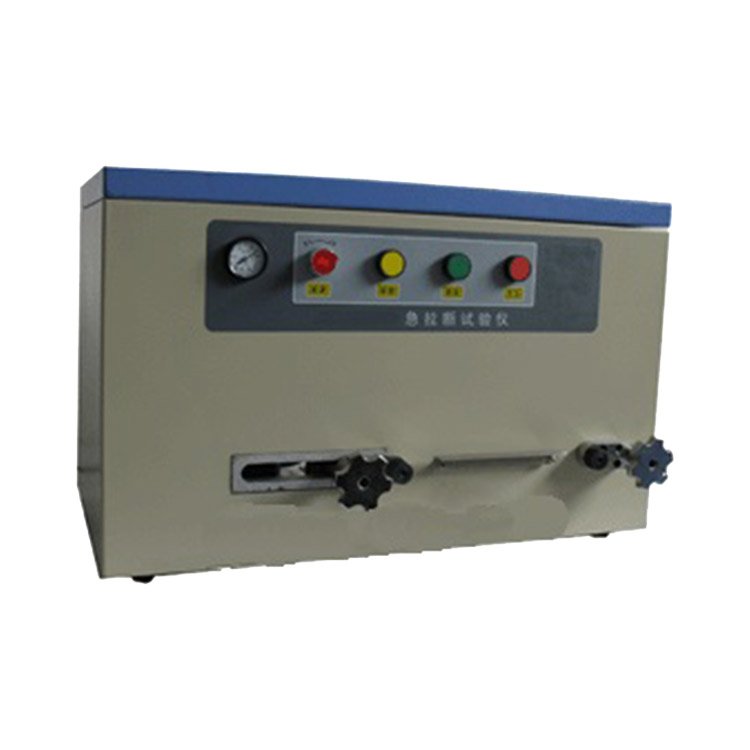
The KR‑1604 sudden‑break tensile tester is dedicated mechanical‑performance test equipment for magnet / enameled round wire. It assesses paint‑film adhesion property for specimens with conductor diameter up to φ1.000 mm. Driven by built‑in pneumatic power unit, the machine pulls wire samples at high‑speed impact to fracture point. Operators inspect whether the enamel insulating coating peels or cracks upon sudden breakage, to judge the bonding quality between paint layer and copper conductor.
This benchtop instrument follows GB/T 4074.3 test method and JB/T 4279.5 equipment‑verification specification. Widely adopted by enameled‑wire manufacturers, electrical‑material R‑D labs and quality‑supervision‑testing institutions for incoming‑material inspection and finished‑product batch validation.
Core Product Competitive Advantages
- Integrated built‑in pneumatic power assembly
Self‑contained air compressor removes requirement for external air source. Automatic constant‑pressure control maintains stable driving force, ensuring consistent high‑speed pulling output across repeated test cycles.
- High‑speed sudden‑pull impact performance
Achieves breaking velocity ≥2 m/s, fully meeting standard‑mandated impact‑pull‑test conditions. Sample clamping mechanism prevents specimen slippage during rapid tensile fracture, avoiding distorted test observations.
- Rigid compact benchtop cabinet construction
Heavy‑duty metal frame guarantees structural stability under pneumatic impact loads. Optimised footprint occupies limited lab‑bench area for daily QC‑testing workflows.
- Simple manual‑operation workflow
Straight‑forward specimen clamping and one‑trigger test start. Operators visually examine paint‑film condition after wire fracture, no complicated programming required for routine batch‑tests.
- Low‑power stable operation
Low power consumption below 100 W. Suitable for long‑duration continuous‑running in factory quality‑control stations.
Complete Technical Parameter Table
| Parameter Item | KR‑1604 Standard Specification |
|---|---|
| Sudden‑Pull Breaking Speed | ≥ 2 m/s |
| Applicable Wire Diameter | ≤ φ1.000 mm enameled round wire |
| Input Power Supply | AC 220 V ±10 %, 50 Hz |
| Rated Power Consumption | <100 W |
| Overall Dimension(L×W×H) | 670 × 450 × 420 mm |
| Complete‑Machine Net‑Weight | 40 KG |
Compliance Standards: GB/T 4074.3, JB/T 4279.5
Standard Complete Test Operating Workflow
- Pre‑Test Preparation
Position unit on solid level workbench. Connect mains‑power‑supply. Complete equipment warm‑up for internal pneumatic system. Prepare enameled‑wire test‑specimens cut to standard test‑length.
- Specimen Clamping
Secure both ends of enameled‑wire sample firmly inside upper and lower fixture jaws. Double‑check clamping tightness to eliminate wire‑slippage risk during high‑speed pulling.
- Trigger Sudden‑Break Test
Activate test‑trigger. Pneumatic drive pulls the wire sample at speed ≥2 m/s until conductor fractures. Keep cabinet closed during impact‑pull procedure for operator safety.
- Post‑Fracture Specimen Evaluation
Open fixture, retrieve broken‑wire sample. Carefully inspect enamel paint‑film around fracture point for cracking, peeling or delamination. Record paint‑film adhesion performance for quality‑report filing.
- Post‑Test Tidying
Clear wire fragments from fixture zone. Power‑off instrument after finishing batch‑testing. Periodically inspect clamping‑jaw wear condition and pneumatic‑system pressure stability.
Wide Industrial Application Scenarios
Enameled‑Magnet‑Wire Manufacturing Enterprises
Paint‑film adhesion batch‑QC testing for finished enameled round wire products; material‑comparison for new‑varnish formulation development.
Electrical‑Material & Winding‑Wire R‑D Departments
Evaluate coating‑bonding‑reliability of different enamel insulation formulas, optimise wire‑coating‑process parameters.
Quality‑Supervision & Product‑Inspection Institutes
Carry‑out GB/T 4074.3‑compliant sudden‑break performance verification for enameled‑wire product‑audit tasks.
University Electrical‑Engineering‑Material Laboratories
Experimental‑teaching‑platform for researching magnet‑wire mechanical‑insulation‑properties.
Third‑Party Accredited‑Wire‑Testing‑Organizations
Conduct standard sudden‑break adhesion assessment and issue formal inspection‑documents for product‑certification‑audits.
Standard Factory‑Full‑Delivery Kit
- KR‑1604 enameled‑wire sudden‑break tester main benchtop unit (built‑in pneumatic assembly)
- Standard wire‑clamping‑fixture set
- Power‑supply connecting‑cable
- Multilingual printed‑operation‑manual complying with GB/T 4074.3, JB/T 4279.5 specifications
- Factory‑issued performance‑inspection‑certificate
Optional spare‑parts & custom‑options: replacement fixture jaws, custom‑voltage power‑supply‑adaptation.
Global Distributor & After‑Sales‑Support
We provide remote‑one‑on‑one operational guidance covering specimen‑clamping, pneumatic‑system inspection and daily preventive‑maintenance. Spare‑parts stock includes fixture‑jaws and pneumatic‑accessories. Bulk‑order customers can apply for custom‑power‑supply‑voltage variants for overseas‑market deployment. Regional‑exclusive‑agent privileges contain priority‑production‑scheduling, OEM private‑branding‑services and complete‑set high‑definition product‑marketing‑image‑resources.
Product‑Banner‑Marketing‑Slogan
KR‑1604 Enameled‑Wire Sudden‑Break Tester | GB/T4074.3‑JB/T4279.5‑Compliant Magnet‑Wire Paint‑Film‑Adhesion‑Impact‑Pull‑Testing‑Instrument
Core‑Feature‑Labels‑For‑Product‑Images
GB/T4074.3‑JB/T4279.5‑Compliant, Enameled‑Wire‑Sudden‑Break‑Test, ≥2m/s‑High‑Pull‑Speed, ≤φ1.0mm‑Test‑Range, Built‑In‑Pneumatic‑System, Auto‑Constant‑Pressure‑Control, Anti‑Slip‑Wire‑Fixture, Benchtop‑Compact‑Cabinet, Low‑Power‑Consumption, Magnet‑Wire‑Paint‑Film‑Adhesion‑Performance‑Evaluation
Safety‑Operation‑Reminder
Keep protective cabinet closed while executing sudden‑pull impact test to prevent flying‑wire‑fragment injury. Check fixture‑jaw fastening condition before each test‑run. Periodically inspect pneumatic‑component sealing‑status. Ensure reliable equipment‑grounding before power‑on.

DGKAREY – Your Reliable Partner in Global Supply
We go beyond supplying testing equipment. Our team manages the full journey — from export procedures to delivery at your door — ensuring efficiency, transparency, and peace of mind.
Related products
-

KR‑1308 Series Metal Wire Elongation & Tensile Performance Tester
-

KR‑1317 Phenolphthalein‑Solution Enameled‑Wire Pin‑Hole Detector
-
KR‑1320 Series High‑Voltage Dielectric Breakdown Strength Tester
-

KR‑1311 Horizontal Connector Insertion‑Extraction Force & Endurance Tester
-

KR‑1309 15 kV Power‑Frequency Spark Defect Detector for Wire & Cable
-

KR‑1609 Enameled‑Wire Lacquer‑Film Continuity Tester
-

KR‑1615 Enameled‑Wire Solvent‑Resistance Tester
-

KR‑1616 Enameled‑Wire Softening Breakdown Tester