
Product Overview
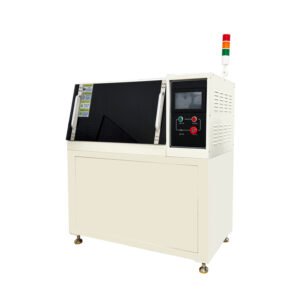
The KR‑1616 softening‑breakdown tester is dedicated thermal‑performance test equipment for magnet‑wire products. It assesses high‑temperature insulation reliability of enamel‑coating under combined thermal, mechanical load and electrical stress. Two enameled‑wire specimens are crossed at 90° inside brass heating mould. Under preset elevated temperature and standard mechanical weight load, AC test voltage is applied continuously. When insulating paint‑film softens and fails to separate conductors, short‑circuit triggers alarm and auto‑unloading. It records breakdown temperature and holding duration as core thermal‑resistance indicators.
This bench‑top instrument is applicable for enamelled round wire and tape‑wrapped round wire with conductor nominal diameter from 0.020 mm up to 3.000 mm. It complies with GB/T 4074.6‑2008, IEC 60851‑6:1996, JB/T 4279.8‑2008 and GB/T 6109‑2008 norms. Widely used in enameled‑wire manufacturing plants, electrical‑material R‑D labs and accredited wire‑product‑testing‑institutes for incoming‑material inspection and finished‑goods batch validation.
Core Product Competitive Advantages
- High‑precision closed‑loop brass heating‑mould system
Adopts large‑size brass heating block for uniform heat conduction. Test‑temperature is adjustable from room temperature up to 500 ℃ with automatic constant‑temperature control. Temperature reading deviation between display and actual specimen intersection point stays below 2 ℃, securing stable thermal‑condition for each test cycle.
- Full‑automatic complete‑test‑cycle workflow
Users pre‑set pre‑heating duration and test holding‑time. The unit automatically completes specimen pre‑heating, weight‑loading and AC‑voltage application. Once sample breaks down or timing expires, it executes auto unloading, triggers audible‑visual alarm and retains test time & temperature readings without manual intervention.
- Built‑in forced‑air rapid‑cooling fan
After finishing one test run, cooling fan quickly dissipates heat from brass mould. Shortens waiting interval between successive specimen batches and improves overall laboratory testing throughput.
- Complete‑set standard weight‑kit for variable mechanical‑load
Supports multiple standard‑weight combinations, which can assemble different pressing‑load values to satisfy diverse magnet‑wire grade test‑spec requirements. Weight‑seat and each individual counter‑weight are fully supplied with the main unit.
- Clear digital multi‑panel display layout
Independent digital displays show real‑time temperature and elapsed test‑time. Control‑buttons are grouped by functional zones, so lab technicians can operate without complex training.
Complete Technical Parameter Table
| Parameter Item | KR‑1616 Standard Specification |
|---|---|
| Applicable Specimen | Enameled / tape‑wrapped round wire, nominal conductor diameter:0.020‑3.000 mm |
| Brass Heating‑Mould Dimension | 100 × 100 × 70 mm |
| Crossing‑Angle For Two Specimens | 90° |
| AC Test Voltage Between Specimens | AC 100 ± 10 V |
| Break‑Over Operating‑Current | (5 ± 0.5) mA |
| Circuit Short‑Circuit Current | <50 mA |
| Temperature Display‑Sample‑Point Deviation | <2 ℃ |
| Pre‑heating & Test‑Timing Range | 0‑999 s adjustable;timing error ±1 s (@120 s) |
| Test‑Temperature Setting Scope | Room temperature ~ 500 ℃, auto thermostat |
| Heating Power | 900 W |
| Input Power Supply | AC 220 V ±10 %, 50 Hz |
| Operating Ambient | 0‑40 ℃;Relative Humidity ≤85 %RH |
| Overall Dimension(L×W×H) | 540 × 310 × 345 mm |
| Complete‑Machine Net‑Weight | 32 KG (including full‑set weights) |
| Supplied Standard Weights | 0.25N seat, 0.15N,0.25N,0.45N,1N,1.2N,3.5N,4.5N(×2),17N,34N,35N |
Compliance Standards: GB/T 4074.6‑2008, IEC 60851‑6:1996, JB/T 4279.8‑2008, GB/T 6109‑2008
Standard Complete Test Operating Workflow
- Pre‑Test Preparation
Place tester on level lab bench, connect mains‑power. Check brass heating‑mould surface is clean without residual enamel debris. Prepare enameled‑wire test‑specimens, select and assemble required combination of standard weights according to product‑standard. Configure target test‑temperature, pre‑heating period and test holding‑time on control panels.
- Specimen Mounting
Lay two wire samples cross‑wise at 90° angle inside heating‑mould groove. Place combined‑weight assembly precisely onto wire intersection point. Confirm wiring of AC test‑voltage circuit is well‑connected.
- Launch Automatic Test Sequence
Press start‑button. Instrument heats mould up to preset temperature and maintains pre‑heating duration. After pre‑heating finishes, test‑voltage is applied automatically. System keeps monitoring circuit‑current signal continuously.
- Breakdown Judgement & Data Recording
If enamel‑coating softens and causes electrical short‑circuit, the machine immediately removes load & voltage, activates sound‑light alarm and freezes breakdown temperature plus elapsed‑time data. If no breakdown occurs when timing expires, unit also completes auto‑unloading. Record reading for quality‑report filing. Multiple parallel‑specimen tests are recommended.
- Post‑Test Tidying
Take‑out tested wire samples. Turn‑on forced‑air‑fan to cool brass mould. Reset instrument parameters for next‑batch test. Periodically inspect weights for surface‑wear and check temperature‑sensor accuracy.
Wide Industrial Application Scenarios
Enameled‑Magnet‑Wire Manufacturing Enterprises
Batch QC softening‑breakdown inspection for finished‑enameled‑wire; evaluate high‑temperature insulation‑performance of new varnish formulations in trial‑production projects.
Electrical‑Material & Winding‑Wire R‑D Departments
Research thermal‑mechanical combined‑failure mechanism of enamel paint‑film; optimise wire‑coating and baking‑process parameters.
Quality‑Supervision & Product‑Inspection Institutes
Carry‑out GB‑IEC‑compliant softening‑breakdown verification for magnet‑wire batch‑audit‑tasks.
University Electrical‑Engineering‑Material Laboratories
Experimental‑teaching‑equipment for studying thermal‑ageing and dielectric‑failure behaviour of winding‑wire insulation.
Third‑Party Accredited‑Wire‑Testing‑Organizations
Conduct softening‑breakdown assessment and issue formal inspection‑documents for product‑certification‑audits.
Standard Factory‑Full‑Delivery Kit
- KR‑1616 enameled‑wire softening‑breakdown tester main bench‑top unit
- Brass heating‑mould assembly
- Complete‑set standard weight‑kit (weight‑seat & each counter‑weight as per specification table)
- Built‑in forced‑air cooling‑fan module
- Power‑supply connecting‑cable
- Multilingual printed‑operation‑manual complying with GB‑IEC‑relevant‑test‑specifications
- Factory‑issued performance‑inspection‑certificate
Optional spare‑parts & custom‑options: replacement brass heating‑mould, custom‑voltage power‑supply‑adaptation.
Global Distributor & After‑Sales‑Support
We provide remote‑one‑on‑one operational guidance covering weight‑combination selection, specimen‑cross‑mounting, temperature‑&‑timing‑parameter‑setting and daily preventive‑maintenance. Spare‑parts stock includes heating‑mould and weight‑accessories. Bulk‑order customers can apply for custom‑power‑supply‑voltage variants for overseas‑market deployment. Regional‑exclusive‑agent privileges contain priority‑production‑scheduling, OEM private‑branding‑services and complete‑set high‑definition product‑marketing‑image‑resources.
Product‑Banner‑Marketing‑Slogan
KR‑1616 Enameled‑Wire Softening‑Breakdown Tester | GB/T4074.6‑IEC60851‑6‑Compliant Magnet‑Wire‑High‑Temp‑Insulation‑QC‑Testing‑Instrument
Core‑Feature‑Labels‑For‑Product‑Images
GB/T4074.6‑IEC60851‑6‑Compliant,Enameled‑Wire‑Softening‑Breakdown‑Tester,0.020‑3.000mm‑Wire‑Range,Room‑Temp‑500℃‑Brass‑Heating‑Mould,90‑Degree‑Cross‑Specimen‑Setup,AC100V‑Test‑Voltage,0‑999s‑Programmable‑Timer,Auto‑Preheat‑Load‑Voltage‑Control,Auto‑Unload‑Alarm‑On‑Breakdown,Built‑In‑Forced‑Air‑Cooling‑Fan,Full‑Set‑Standard‑Weights,Benchtop‑Compact‑Cabinet,Magnet‑Wire‑High‑Temperature‑Enamel‑Insulation‑Performance‑Evaluation
Safety‑Operation‑Reminder
The brass‑mould reaches high‑temperature during testing; avoid direct skin‑contact to prevent scald injury. Do not touch high‑voltage test‑circuit terminals while power‑on. Ensure weights are steadily placed on specimen intersection point. Reliable equipment‑grounding must be completed before power‑on.

DGKAREY – Your Reliable Partner in Global Supply
We go beyond supplying testing equipment. Our team manages the full journey — from export procedures to delivery at your door — ensuring efficiency, transparency, and peace of mind.
Related products
-

KR‑1308 Series Metal Wire Elongation & Tensile Performance Tester
-

KR‑1317 Phenolphthalein‑Solution Enameled‑Wire Pin‑Hole Detector
-
KR‑1320 Series High‑Voltage Dielectric Breakdown Strength Tester
-

KR‑1311 Horizontal Connector Insertion‑Extraction Force & Endurance Tester
-

KR‑1309 15 kV Power‑Frequency Spark Defect Detector for Wire & Cable
-

KR‑1604 Enameled Wire Sudden‑Break Tester
-

KR‑1609 Enameled‑Wire Lacquer‑Film Continuity Tester
-

KR‑1615 Enameled‑Wire Solvent‑Resistance Tester